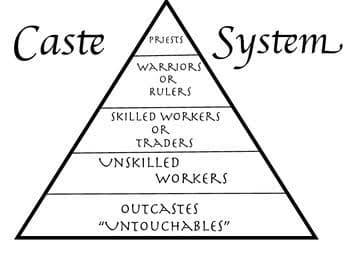
In drawing rooms across Pakistan and India, the same question gets asked before anything else.
Not: Is he a good Muslim? Not: Does she have strong character?
But: Which caste are they from?
Syed or non-Syed. Jat or Arain. Rajput or Sheikh. Memon or Punjabi. The label comes first. Everything else — deen, akhlaq, education, compatibility — comes after. Sometimes it never comes at all.
This post is not written to mock cultural traditions. It is written because millions of compatible, sincere Muslims are being kept apart — or pushed into miserable marriages — by a system that Islam explicitly, emphatically, and repeatedly condemned.
Allah's Standard of Nobility
The starting point in any Islamic discussion on caste, tribe, or race is one of the clearest verses in the Quran:
"O mankind, indeed We have created you from male and female and made you peoples and tribes so that you may know one another. Indeed, the most noble of you in the sight of Allah is the most righteous of you. Indeed, Allah is Knowing and Aware." — Surah Al-Hujurat, 49:13
Read that carefully. Allah created tribes and peoples — not so one could claim superiority over another — but so that you may know one another. Diversity of lineage is a mechanism for acquaintance, not a hierarchy of worth.
And then Allah states, without ambiguity, what the actual measure of nobility is: taqwa — God-consciousness, righteousness, fear of Allah.
Not blood. Not family name. Not which tribe your grandfather belonged to.
Taqwa.
The Prophet ﷺ Was Explicit — In Front of Thousands
The Prophet Muhammad ﷺ did not leave this principle as a passing comment. On the most significant occasion of his life — the Farewell Sermon at Arafah, delivered before over 100,000 companions — he addressed it directly:
"O people! Your Lord is one and your father is one. There is no superiority of an Arab over a non-Arab, nor of a non-Arab over an Arab, nor of a white person over a black person, nor of a black person over a white person — except in taqwa." — The Farewell Sermon of the Prophet ﷺ | Reported in Musnad Ahmad and authenticated by scholars of hadith
This was the final sermon. These were the words the Prophet ﷺ chose to leave his Ummah with. He looked at a crowd representing the entire known Muslim world — different tribes, skin colours, languages — and he dismantled every claim of superiority based on lineage or race.
If caste-based pride had any place in Islam, this was the moment to say so. Instead, he abolished it.
What the Prophet ﷺ Said About Who to Marry
When a companion came to the Prophet ﷺ seeking guidance on marriage, the response was direct:
"A woman is married for four things: her wealth, her lineage, her beauty, and her religion. So choose the one who is religious, or your hands will be in the dust." — Sahih Bukhari, 5090 | Sahih Muslim, 1466
Notice what this hadith does. It doesn't say lineage is irrelevant — it acknowledges it as one of four things people consider. But then the Prophet ﷺ redirects: choose the religious one.
Religion. Character. Deen.
Not the right surname. Not the right biradari. Not the right caste.
The Prophet ﷺ knew that people would consider these things. He named them. And then he told you which one to actually choose.
The Prophet ﷺ Demonstrated This — Not Just Preached It
Words are easy. The Prophet ﷺ backed his teaching with action.
Bilal ibn Rabah رضي الله عنه — a freed Abyssinian slave, from what Arab society considered the lowest possible social station — was placed by the Prophet ﷺ as the first mu'adhdhin of Islam. When the Ka'bah was conquered, it was Bilal who climbed to its roof and called the adhan. The Prophet ﷺ said of him:
"Bilal is ahead of many."
A former slave. Elevated above nobles. Because of his taqwa.
The Prophet ﷺ also arranged and encouraged marriages that deliberately crossed tribal and social lines — because Islam was breaking a system, not accommodating it.
What Is "Syed" Status, and Does Islam Grant It Special Rights in Marriage?
In South Asia, one of the most common caste barriers is the insistence that Syeds (those claiming descent from the Prophet ﷺ) must only marry within Syed families.
A few things to consider honestly:
First, descent from the Prophet ﷺ — if genuine — is an honour of lineage, not an automatic elevation of character. The Quran is clear that on the Day of Judgement, no lineage will benefit anyone:
"And when the Trumpet is blown, no kinship will there be among them that Day, nor will they ask of one another." — Surah Al-Mu'minun, 23:101
Second, the Prophet ﷺ himself arranged the marriage of his cousin Zaynab bint Jahsh — from noble Qurayshi lineage — to Zayd ibn Harithah, who was a freed slave. This was a deliberate act to break the tribal marriage hierarchy.
Third, claiming Syed status as a marriage requirement has no explicit basis in the Quran or authenticated Sunnah. It is a cultural import, not a religious obligation.
The Caste System's Real Cost
Beyond the theological argument, there is a human cost being paid right now, in real families:
- Women past their 30s, still unmarried, because proposals from "lower" biradaris were rejected without consideration
- Men of excellent character and deen, turned away because their family name didn't match
- Couples with genuine compatibility and mutual respect, kept apart by parents who have never met them but have already decided
- Forced marriages within the same caste to people who are fundamentally incompatible — all to preserve "family honour"
This is not Islamic family values. This is pre-Islamic tribal custom wrapped in religious language.
Pride in Caste Is Explicitly Condemned
The Prophet ﷺ said:
"Allah has removed from you the pride of the pre-Islamic period of ignorance and its boasting of ancestral glories. One is only a pious believer or a miserable sinner. All people are children of Adam, and Adam was created from dust." — Sunan Abu Dawud, 5116 | Sunan At-Tirmidhi, 3955 — Hassan by At-Tirmidhi
Pride of the pre-Islamic period of ignorance. That is what the Prophet ﷺ called it. Jahiliyyah — the era Islam came to end.
Boasting of caste, of biradari, of family name, of Syed lineage — the Prophet ﷺ placed all of it in the category of ignorance that Islam came to dismantle.
What Should Actually Matter?
The Quran and Sunnah together give us a clear framework for who to consider for marriage:
1. Deen and character — Is this person God-conscious? Do they have honesty, patience, and integrity in how they live?
2. Compatibility — Do they share values, life goals, and vision for the kind of home they want to build?
3. Mutual respect and attraction — The Prophet ﷺ encouraged seeing a potential spouse before marriage for exactly this reason.
4. Wali involvement and proper process — The Islamic marriage process has its own structure that protects everyone involved.
Caste is not on this list. It never was.
A Word to Parents
If you have rejected a proposal purely because of biradari or caste, consider this question honestly:
On the Day of Judgement, when Allah asks you why you prevented your daughter from marrying a man of good deen and character — what will you say?
"He wasn't Syed"?
"We are Rajput and they were Arain"?
The Prophet ﷺ warned us against this directly. Our cultural comfort is not worth more than the command of Allah and His Messenger ﷺ.
Conclusion
Islam arrived into a world obsessed with lineage and tribal identity — and it dismantled it. Not partially. Not gently. Completely and explicitly, from the Quran, from the Farewell Sermon, from the daily actions of the Prophet ﷺ himself.
The caste system in South Asian Muslim marriage culture is not Islamic. It is jahiliyyah with Islamic vocabulary borrowed to make it seem acceptable.
Every Muslim deserves to be seen for who they are — their taqwa, their character, their deen — not for the name they were born into.
"Indeed, the most noble of you in the sight of Allah is the most righteous of you." — Surah Al-Hujurat, 49:13
That is the standard. It always was.
Kufu matches Muslims based on values, compatibility, and character — not caste, biradari, or tribal identity. Download the app.